

We Always Offer Tea
on the business of hospitality.

In our home, tea is not saved for special occasions, to be served with cake or when you’re running hot and have a sore throat.
Tea is a lifeline, an essential part of our household, our routine. A cup breaks your fast upon waking, is enjoyed throughout the day with meals, and sipped on in the stillness of the evening. Water is heated and reheated continuously, ready to be poured for any reason, big or small.
It is how it has always been. Our heritage is found in a cup of tea; I once watched as my grandmother dried fresh flowers on the balcony of her colorful apartment in Lviv, preparing to make chamomile packets. I remember the herb flavored water in my aunts meek cottage in Ukraine—she was not poor per se, but having many mouths to feed while living in a fairly low economic state on just one income, a penny was never wasted. Still, she poured us tea. No matter how desolate you are, it is always in the cupboard. And not just for yourself— for everyone.
We always offer tea. It is noncommittal, inexpensive, always readily available for spontaneous conversation. A cup of tea is an invitation for a long night discussing family, politics, memories, religion, dreams, and the instability of the future. No get together is complete without it.
It is why, when I was just four days postpartum, speaking to my grandma on the phone, I told her a friend was coming by to meet my son. She quickly asked if I had tea ready for company, not because she expected me to “host,” but because she expected me to welcome.
Along with just about everything else in this day and age, gathering with friends is an overly-glamorized, capitalistic, and hectic endeavor. Every party needs a theme, a new set of ceramic plates, garlands, candles, flowers, the list is endless. The reason for hosting, now, is the aesthetic, the dramatics, the Pinterest photos. Community falls farther down the list, somewhere between color scheme and food menu.
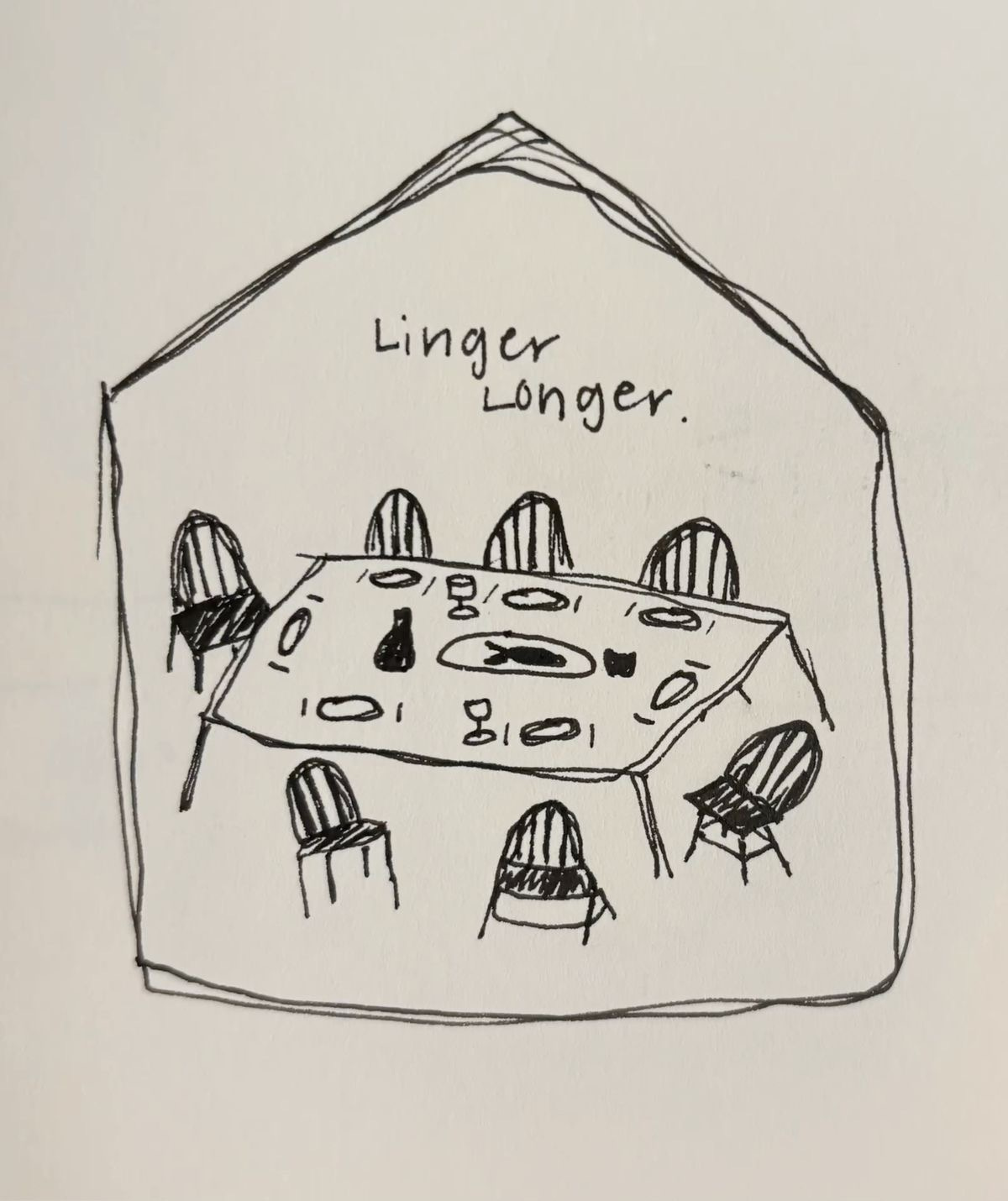
There’s a timeline now; welcome drinks, serve food, take photos, chit chat, serve dessert, go home. There will be no lingering, we don’t have the time!
Conversations are limited to topics that won’t evoke an argument or dabble into anything controversial. The table is cleared quickly and effectively. Chairs are made to be slightly uncomfortable when seated for an extended period of time. Once the photos are taken, we’re all free to go home. There will be no tea— God forbid we overstay our welcome.
I once listened to a sermon which changed the way I saw hosting. The pastor spoke of Godly gifts, ones bestowed onto believers: leadership, teaching, exceptional vocal abilities. All of these gifts are individualistic, and many require hours of practice and training. One gift, however, that is readily available to each and every member of the church is the gift of hospitality.
In fact, of all the recorded scenes of Jesus in the four gospels, 43% of them took places around tables, meals, and homes. He knew that faith grows, not in extravagance or theatrics, but in the quiet vulnerability of your home. Hospitality is evangelism.
I love a party theme just as much as the next girl— for the creativity and fun of it. Amelia Endmondsom is one of my favorite social media follows, and I have posts about themed dinners I’ve hosted before. Yet my favorite nights happen with no prior planning.
There is no agenda, no pressure to the get together; we are there to enjoy one another. It is how hosting once was— a communal activity created for the sole purpose of spending time with important people in your life. It can be easy to get tied up in the reasons why we cannot host: an inability to cook, the lack of space, the absence of pretty plates or decorations.
Nonetheless, we all have the means to say,
“Come on in, I’m making a cup of tea.”
Soo beautiful, it changed my perspective 💗💗
Incredibly beautifully said. I’m ready for our cup of tea ♥️